
Common issues such as corrosion, pipe leakage, pressure loss, contamination, and frequent maintenance often arise when the wrong piping material is used or when piping systems are poorly designed. To overcome these challenges, industries increasingly rely on stainless steel pipe systems due to their strength, durability, corrosion resistance, and long service life. In modern industrial and commercial developments, stainless steel piping plays a critical role in ensuring the safe and efficient transportation of fluids, whether in manufacturing plants, water treatment facilities, hospitals, or food-processing industries.
Incorrect installation, however, can cause even the best quality stainless steel to fail. Corrosion, leakage, contamination, inefficiency, and the resultant unplanned service, repair, and maintenance disruptions are some of the outcomes of bad installation. In fact, corrosion and leakage are specifically caused by errors in installation and not by the product.
As modern piping systems have extended the use of press fittings and crimping, installation has become even more critical. The most frequent mistakes in the installation of stainless steel pipe systems, particularly with press-fit systems, are addressed in this guide and will offer practical advice to increase the reliability, performance, and durability of your stainless steel pipe systems.
Importance of Accurate Stainless Steel Pipe Installation
Installing stainless steel piping systems accurately ensures the efficiency, safety, and longevity of the systems. Reliable stainless steel piping systems that perform well for extended periods of time and that are low maintenance are a boon to a company’s bottom line, eliminating the stress and costs of unplanned maintenance and system failures.
Accurate installation improves the performance of systems and reduces the risk of leakage and contamination. These benefits are highly desirable in the pharmaceutical, food processing, and chemical industries where system integrity and corrosion management are of unquestionable importance.
Modern press-fitting systems provide compelling improvements over conventional welding methods. Press-fitting systems speed installation and reduce downtime by providing a method of creating permanent, leak-free joints without requiring system shutdown. These advantages are fully realised only when proper installation methods are followed. Improper installation and crimping, use of the wrong tools, or damaged seals can all lead to total system failure.
Correct installation methods and adherence to manufacturer specifications help businesses realize the reliability, regulatory compliance, and total value of their stainless steel piping networks.
Choosing the Wrong Stainless Steel Grade
One of the more frequent errors in the stainless steel piping installation process is the selection of the wrong material grade based on operating conditions. It is a misconception to think the presence of stainless steel means no corrosion. Of course, all stainless steel contains chromium and thus can be considered corrosion resistant, but the different grades throughout the family of alloys provide starkly different levels of protection based on environmental conditions and processing requirements.
For example, SS 304 stainless steel works quite well for most indoor, low-moisture environments. However, in the presence of chlorides and chemicals, salt water, and high humidity, SS 304 does not provide suitably corrosion-resistant protection. In this application, SS 316 is often specified due to further protection against corrosion and higher tolerance to chlorides.
Failure to provide the correct grade for the application will result in pitting, premature failure and corrosion, higher maintenance costs, and a short system life.
Press-fit systems are impacted by the same issues. Installers must ensure that the press fittings and seals, as well as the pipe, are all of the same grade of stainless steel and are compatible with the expected service conditions. Joint performance will be compromised and leakage and corrosion will become a greater issue with the use of incompatible fittings and seal materials.
Improper Handling and Storage of Pipes
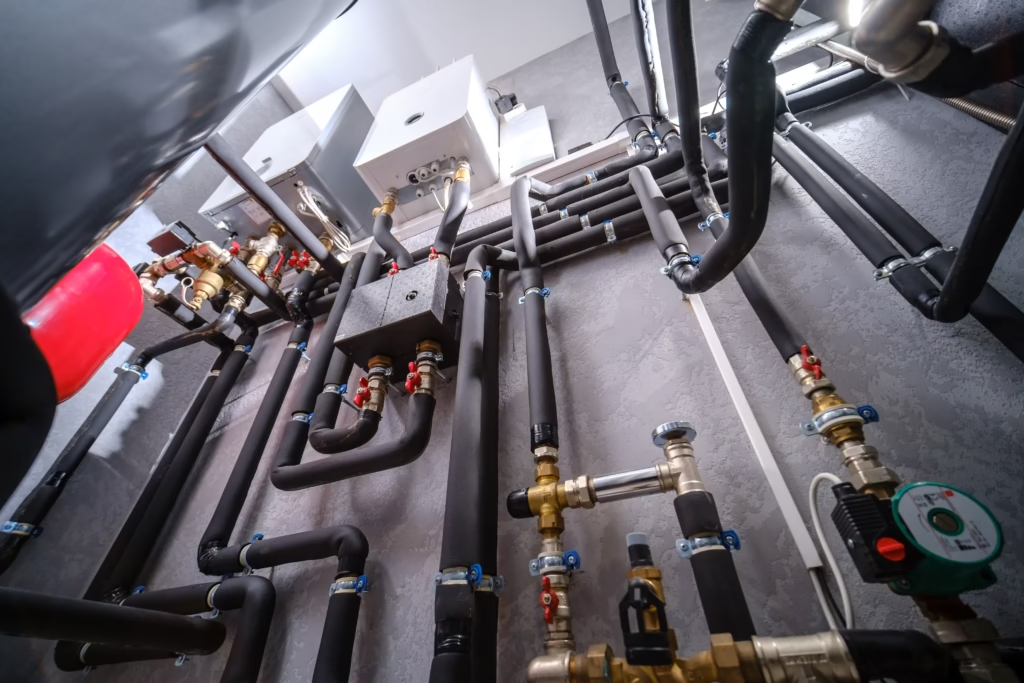
Stainless steel pipes stored and handled improperly lose their ability to resist corrosion and are unable to perform as intended in the piping system, even before installation. To preserve the protective, passive layer, the surface of stainless steel pipes should remain clean and undamaged.
During storage, exposure to contaminants like grease, oil, and dirt, as well as to moisture, may cause contact corrosion. More severe, localized corrosion may result from scratches and dents caused during the transportation and handling of the pipes and fittings.
One of the worst mistakes is the storage of stainless steel piping materials in the same area as carbon steel materials. When the two materials touch, iron contamination and galvanic corrosion occurs, compromising the stainless steel surface.
In press-fit systems, handling practices become even more critical. Dents, scratches, and contamination on pressing and sealing surfaces, as well as fittings and tubing, result in inadequate crimping, sealing, and secure joint connections.
In order to prevent all of the problems associated with stainless steel pipes and press fittings should be stored in dry, clean areas, protected from physical and contamination damage during transport and installation, and should be supplied with protective coverings.
Poor Joining Techniques
Poor joining techniques account for the majority of failures in stainless steel piping systems, especially with new press-fit installations. Although press fittings are easier to use than welding, they still require carefulness to ensure a secure and leak-proof joint.
A frequent mistake is incorrect insertion depth. If a pipe has not been completely inserted into the fitting before being pressed, the connection will likely fail. Similarly, wrong pressing jaws or incorrect jaw profiles result in incomplete and uneven crimps, which weakens the joint.
Another major concern is the poor preparation of pipes. Dirty pipe ends or failing to deburr pipe ends and leaving metal swarf inside of the pipe will result in the premature failure of the joint. This poor preparation will cause leaking and cause O-rings and seals to become damaged during assembly.
Leaking and joint failure will occur if seals are not compatible with the correct O-rings, if the pipe is not at the correct temperature, or if the pipe does not have the correct process media. This will also cause the seal to degrade over time.
Contamination during the joining process can also affect the performance of the system. If sealing surfaces are contaminated with dirt, grease, or oil, the joint will not seal properly, which will cause a reduction in the joint’s reliability.
Leaks are likely to occur after spending time doing repairs, maintenance and documenting the work. To prevent downtime and warranty issues, installers should use calibrated press tools, verify insertion depth, mark and inspect press connections, perform pressure and leak tests, and document installations. Following these steps will help ensure the reliable performance of the system and extend the service life of the piping.
Failure to Prevent Contamination.
One of the most common reasons for corrosion and the failure of a system to perform is contamination. This is a major concern during the system’s entire life cycle, especially with stainless steel piping systems. Metallic particles or foreign bodies can penetrate stainless steel and cause a corrosion failure.
Common sources of contamination include:
- Contact with carbon steel tools
- Iron particles from grinders or cutting equipment
- Dirty work environments
- Grease, oils, or industrial debris
Food processing, pharmaceuticals, and chemical manufacturing are particularly sensitive industries, and contamination can adversely affect the quality of the product and the safety of the system.
During the installation of press fittings, the sealing surfaces must be clean. Dirt or particles left on the seals or fittings can cause press connections to leak and become a significant safety concern. The following practices should be observed:
Dedicated stainless steel tools should be used
- Minimise contact with carbon steel materials
- Ensure sealing surfaces are clean before crimping
- Keep work environments clean
- Clean and passivate the system after the installation
Contamination during an installation can be prevented, which assures corrosion resistance and usable standards and improves the piping system’s reliability.
Incorrect Pipe Support and Alignment
The structural integrity of stainless steel piping systems is compromised by improper support and misalignment. Insufficient pipe spacing and support cause over-stress to the pipe system, press fittings, and seals. In press fit systems, if pipes are unsupported or misaligned, the fittings will be stressed, and the seals will be compromised due to the vibration and movement the system transmits.
Thermal expansion, pressure fluctuations, and mechanical vibrations will worsen these problems if proper supports are absent in the piping. Over time, this can lead to:
- Deformation of the pipes
- Leakage of joints
- Damage caused by excessive vibrations
- Failure of seals
Proper placement of supports in the piping system reduces the moment loads and prevents unnecessary stress on the system.
Recommended guidelines for spacing and supporting should be followed to ensure piping alignment before beginning the joining operation. The use of guide supports and flexible supports as anchor points provides stability and control for the piping network, as well as improving the network’s operational lifespan.
Ignoring thermal expansion
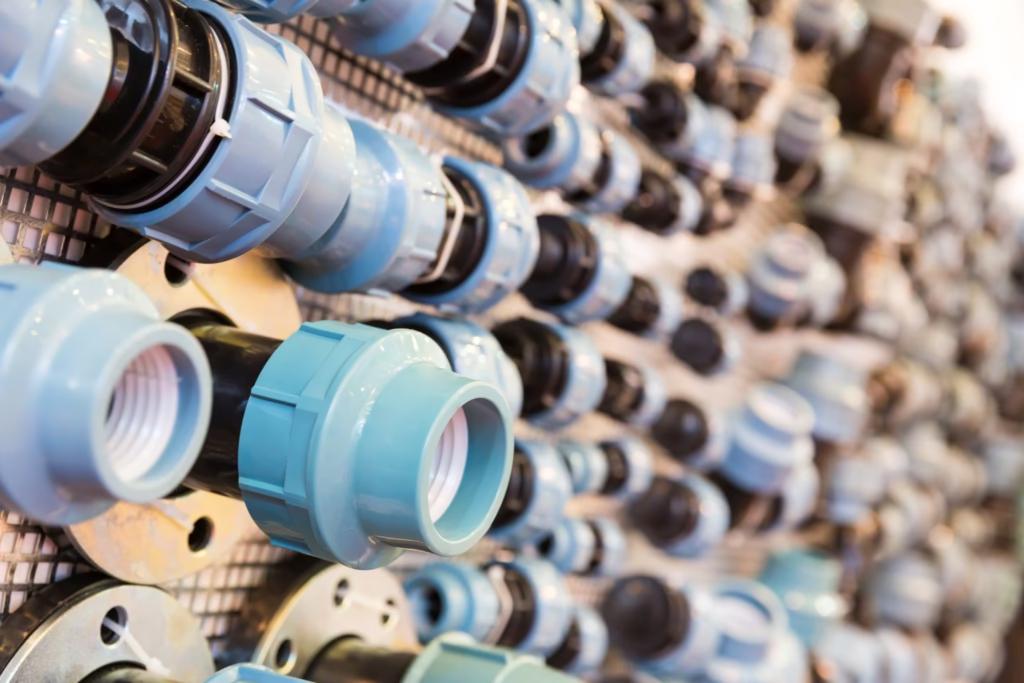
Stainless steel will expand and contract when exposed to various temperature extremes. If thermal expansion is ignored, stress will be placed on the piping network, supports, and joined system components, and will also be placed on the press-fit components.
When creating a system, a common installation mistake made is not incorporating expansion joints, loops, slip supports, or flexible piping. Signs that these have not been incorporated are distortion of the piping system, joints becoming stressed, and piping or joints becoming mechanically damaged.
While press-fit joints can sustain a large amount of operating pressure, they are not built to sustain large amounts of force and the sealing integrity of the press-fit joints may be lost. Uncontrolled stress will have a negative impact on the integrity of the sealing joints.
When designing a piping system, planners should use expansion allowances, supports, and flexible piping to lessen the stress on the piping network. Flexible components and supports should be used to lower the stress on both the piping network and the press-fit joints.
Poor Cleaning and Maintenance after installation
Cleaning and maintaining piping systems after installation is a high-priority concern, as the operating performance of the system and corrosion resistance of the stainless steel piping depend on these actions. Many systems have premature failures due to neglecting these procedures.
Common errors are leaving residual services and internal debris, such as dust and metal contaminants. These contaminants promote localised corrosion and reduce sealing effectiveness and flow rates.
Post-installation, thorough flushing of the piping system is critical in the press-fitting system to eliminate the contaminants produced during the cutting and pressing of the piping. All joints should be inspected visually, and a pressure test should be performed to ensure all joints are connected.
In industries where hygiene and corrosion resistance are critical, passivation may be required to restore the protective layer of the oxide on the surface of the stainless steel.
Post-commission routine maintenance and inspection can be developed to detect piping problems that, if left unattended, can lead to disruptions in the operation of the process.
Ignoring Industry Standards Compliance
To maintain the safety, reliability, and efficiency of stainless steel piping systems, compliance with industry standards and installation regulations is a must because failure to adhere to the standards can lead to the failure of the system and regulations, causing costly corrective actions.
Pharmaceutical, food processing and chemical industries are the most affected industries by the need to ensure hygiene and safety in the installation of the piping system due to pressure testing, leak detection and system integrity documentation.
Installers of press-fitting systems must comply with the manufacturer’s installation specifications and the international standards laid out in EN 10312 and EN 10357, among other local regulations, along with thresholds of compliance.
To verify compliance and ensure quality system installation, tool calibration records, installation reports, and pressure-test reports must be retained. The systems themselves become more reliable, and the operational risks associated with system failures either disappear or are significantly reduced.
Best Practices for Installing Stainless Steel Pipe Systems
When installing a piping system, the system’s durability, efficiency, and reliability can all be prioritised through the use of good practices.
- Choose the Right Material
Make the right stainless steel choice for the environment, temperatures, and pressures. Process media needs to be considered, too. Be sure all press fittings and seals work with the application.
- Joining Procedures
Make sure there is the right depth to the fitting, pipe ends are round, and the right press tool with the right jaw is used. All press connections need to be checked after the press is made.
- Make Installation Clean
Use the proper tools and prevent contamination from steel, dirt, oils, and debris.
- Align and Support the Pipe
Use the proper supports, guides, and anchors so fittings don’t get stressed and allow for expansion.
- Standards and Guidelines of the Manufacturer
Follow the proper instructions for installation and the proper standards and requirements of the industry. All systems must have the pressure tested, leaks checked, and documentation done.
- Make Inspecting and Maintaining a Routine
Make sure systems are checked and look for vibrations, leaks, or loss of sealing. Check for damage to systems, the pipes, and supports cannot be stressed enough.
Why Choose Aquinox India?
Aquinox India is a trusted name in stainless steel piping solutions with 19+ years of industry experience. Since 2007, the company has been delivering advanced press-fitting and stainless steel piping systems for industrial, commercial, and infrastructure projects across India.
With strong expertise in SS 304 and SS 316 piping systems, Aquinox India focuses on quality, durability, corrosion resistance, and reliable performance. The company has successfully supplied solutions for major projects including Chennai International Airport, automobile plants, OEM facilities, pharmaceutical units, food processing industries, and HVAC networks.
Backed by modern in-house manufacturing and advanced European technology partnerships, Aquinox India provides dependable stainless steel piping systems designed for long-term efficiency and low maintenance.

