
SS 304 vs SS 316 is a very popular and versatile material because it’s strong and durable and does not rust. Each variety of stainless steel has different properties, and in certain industries, SS 304 and SS 316 varieties are the most common.
Though they look and seem the same, they differ in performance due to factors like level of moisture, presence of certain chemicals, temperature, etc. It’s important to use the right variety of stainless steel. When the right variety is not used, stainless steel does not last long, and corrosion is more frequent, as is repair.
For general use, SS 304 is a good choice, but for marine and chemical use SS 316 is a better choice and stands up to more corrosion. Knowing the difference in the varieties of stainless steel is good for saving money in the long run and for choosing the right component.
SS 304 vs SS 316 Stainless Steel: What Is the Difference?
SS 304 stainless steel is an austenitic type of stainless steel noted for being a low-cost option that withstands stress and corrosion and is also easily manufactured. It has an approximate composition of 18% chromium and 8% nickel, hence it’s also known to some as 18/8 stainless steel. In its composition, chromium serves to resist corrosion, and nickel increases toughness and durability.
SS304 is very versatile and able to withstand the majority of chemicals, and also doesn’t corrode in moist and oxidising environments. It is also widely used in kitchen equipment, food processing, water systems, and industrial buildings. Its sculptural ability due to its excellent weldability and durability.
Similar to SS 304, SS 316 has chromium and nickel, but SS 316 also contains molybdenum. SS 316 is also an austenitic stainless steel, but is designed for environments that have an even higher risk of corrosion.
Molybdenum also enhances the material’s resistance to corrosion from chlorides and salt water, and is even useful in many chemicals and aggressive industrial conditions. This means that SS 316 stainless steel is more advantageous in aggressive environments where other stainless steels will corrode and fail.
SS 316 is especially useful in the coastal and chemical-processing areas. It protects metallic structures from severe corrosion that occurs in high-salinity and humid environments. SS 316 has better corrosion resistance compared to SS 304 and has better strength, heat resistance and durability. So, it can be applied to long and arduous processes in the industries. Molybdenum, when included in SS 316, raises the alloying cost; therefore, SS 316 will be priced more than SS 304. But for such critical systems, SS 316’s better durability and low maintenance become the deciding factor, and thus the extra cost is justified.
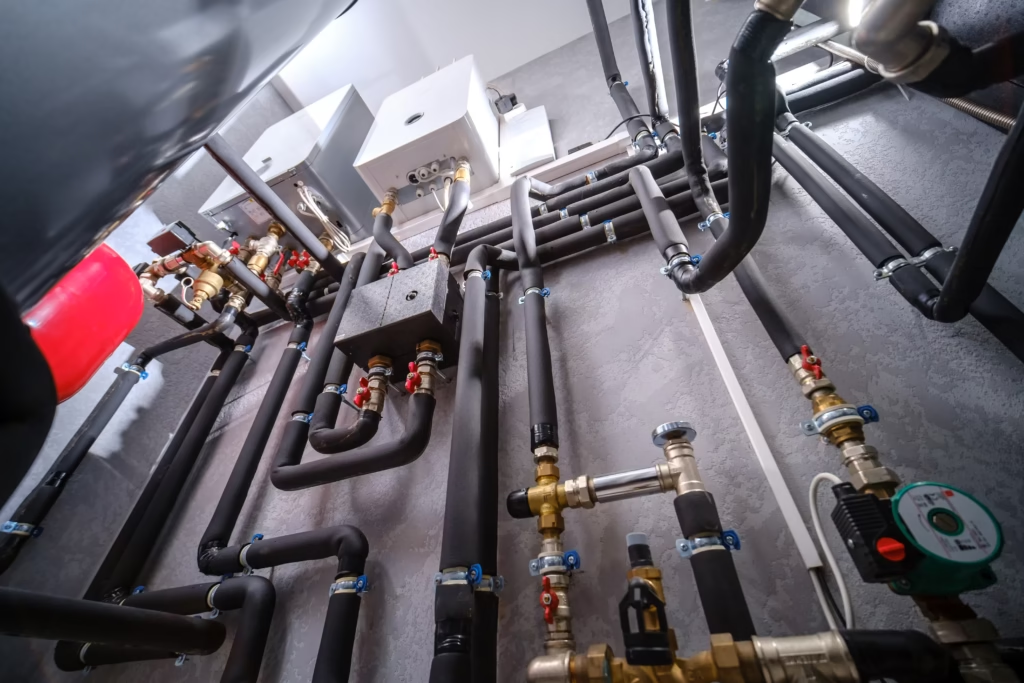
SS 304 vs SS 316: Key Differences Explained
SS 304 and SS 316 are in the same family of stainless steel; however, the following differences are apparent.
- Composition:- SS 304 has Cr and Ni, while SS 316 has Cr, Ni, and Mo. SS 316 has improved corrosion resistance and versatility, especially against chloride and other corrosive environments.
- Corrosion Resistance: Though SS 304 has good corrosion resistance, SS 316 has better corrosion resistance in the most demanding environments. SS 304 can work in the majority of indoor environments and in low-humidity/ moisture environments, while SS 316 can be used in the majority of marine environments and in most chemical-processing environments.
- Durability:- SS 316 has greater durability because of its higher resistance to corrosive pitting and chemical damage. That said, SS 304 is still a strong and effective option for industrial applications.
- Heat Resistance:- Though both SS 304 and SS 316 can offer protection in higher than normal working temperatures, SS 316 provides greater protection in extreme conditions.
- Cost:- Less expensive SS 304 is readily accessible, making it the better choice for cost-sensitive projects. The added molybdenum content and better performance of SS 316 make it even more expensive.
- Maintenance:- SS 304 is more susceptible to corrosive damage and, therefore, needs more consistent upkeep in chemical or coastal environments compared with SS 316, which is better resistant and less susceptible to needing upkeep.
- Lifespan:- SS 304 and SS 316 will both provide long life spans in standard conditions. In these standard conditions, SS 316 will also maintain its structural integrity longer than SS 304.
Which Stainless Steel Has Better Corrosion Resistance?
Corrosion resistance is highly demanded in SS 316 compared with SS 304. SS 316 has molybdenum in its composition, therefore, providing better protection against chlorides, chemicals, and saltwater compared with SS 304.
SS 304 stainless steel is most useful in normal temperature and moisture levels found in most indoor environments. It is corrosion-resistant in kitchens, plumbing systems, furniture, and most industrial uses. With exposure to moisture and salt, or most chemicals, it will develop surface corrosion and pitting.
SS 316 is made for more corrosive situations. It works well in:
- Beachfront regions.
- All things saltwater.
- All things marine.
- All things chemical-based.
- All things with high humidity.
Because of its higher resistance to corrosion, SS 316 is used more in all fields that do not want to fail for operational or safety reasons.
For things near the beach, all things chemical, and things that need maximum anti-corrosive protection, SS 316 is your more likely bet. For most things indoor with limited exposure, SS 304 gives you what you need at a better price.
SS 304 vs SS 316 Price Comparison
Price is what most purchasers think of first when deciding between SS 304 and SS 316 stainless steel. Generally, SS 316 costs more than SS 304 because it is better and priced higher.
SS 316 costs more because it has molybdenum, which improves it in more corrosive situations. Overall, the price difference is due to the fluctuating costs of nickel and molybdenum.
SS 304 is a more affordable option for general-purpose usage. It possesses a great balance of strength and corrosion resistance, and with added cost savings, it certainly can be the go-to option for use in projects that aren’t subjected to severe environmental conditions.
SS 316 is more expensive to use in the short term, but when in use in highly corrosive environments, i.e., the environments that can add further expense in maintenance and replacement costs, SS 316 is the option that will likely offer the best value. Because of the great durability that SS 316 provides in use, it is more likely that it will be the option that is best for use in industries that deal with saltwater and chemicals or industries that operate in environments that are most humid.
From the perspective of buyers, simply purchasing the least expensive option available is rarely the best decision. To compare the full value of SS 304 and SS 316 stainless steel, there must be a careful analysis of the maintenance needs, environmental exposure, and the expected lifespan.
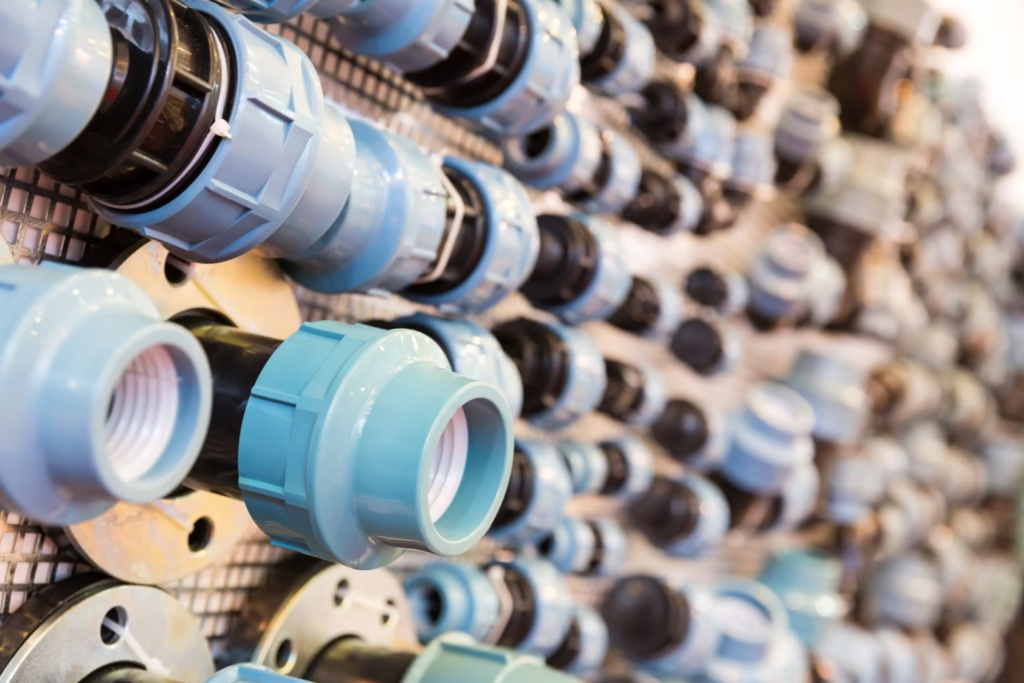
Best Applications for SS 304 & SS 316 Stainless Steel
There are more than a few industries that will utilise the strength of both SS 304 and SS 316 stainless steel. In fact, it’s possible for more than a few industries to use SS 304 and SS 316 stainless steel for the same purpose, but the type of use that is considered most acceptable will vary based on the conditions that are present in the environment in which the steel is being used and the performance needs for the use of the steel.
Best Applications for SS 304 Stainless Steel
SS 304 is a safe option in industries where corrosion is a moderate concern. SS 304 can be safely used to manufacture:
- Kitchen equipment
- Indoor structures
- Furniture
- Water supply systems
- Food processing equipment
- Architectural components
SS 304 is a great option for general industrial and commercial equipment due to the low cost and great value.
Best Applications for SS 316 Stainless Steel
SS 316 provides a level of protection that makes it suitable for a number of highly corrosive applications. These include:
Marine Industry
- Chemical Processing Plants
- Medical/Surgical Equipment
- Coastal Structures
- Pharmaceutical Industry
- Offshore Applications
SS 316 is the better choice for applications which are exposed to saltwater, chemicals, and high humidity. Choosing the correct Stainless Steel grade for the correct application can result in better safety, improved durability, and a better operational lifecycle.
Which Stainless Steel is Better Suited for Your Application?
Choosing between SS 304 and SS 316 is very specific to your application and the environment surrounding it. Both grades of Stainless Steel are high performers, but certain applications are better suited to one over the other.
If the points below apply to your application, then choose SS 304.
- If you are on a low budget
- If the environment is dry and indoors
- If you need Stainless Steel for a general application
- If moderate corrosion resistance is sufficient
- If cost savings are very important
SS 304 is a great choice for applications such as commercial buildings, kitchen equipment, furniture, water systems, and general industrial usage where the environment is not very aggressive.
Choose SS 316 If:
- The application is marine or coastal.
- The project is exposed to chemicals or saltwater
- Long-term durability is important
- Corrosion resistance is a top priority
- The environment is high moisture and coastal
- If low maintenance is desired
Marine applications, pharmaceutical plants, chemical plants, medical equipment, and coastal infrastructure projects are better served with SS 316.
When comparing SS 304 and SS 316, consider the total lifecycle cost, because the lowest initial material price may not lead to the lowest lifecycle cost. Materials that are cheaper upfront may have higher total costs because they have higher maintenance costs when used in inappropriate ways. Making sense of the operational and environmental constraints of your specific project and requirements can be achieved by consulting with your suppliers of stainless steel or an engineer.
Choosing Stainless Steel: Mistakes Buyers Make
Most buyers making poor choices around the purchasing of stainless steel do so by only considering the initial cost and not the eventual performance.
- Price as the Only Consideration
Choosing the cheapest option available without focusing on the performance of your operating environment is not a suitable option. While SS 304 costs less, it can and will perform poorly in the presence of conditions requiring SS 316.
- Environmental Conditions are Ignored
Environmental conditions do impact the performance of stainless steel. Selecting the incorrect grade can result in significantly reduced material performance due to exposure to moisture, chemicals, humidity, and saltwater.
- Misunderstanding the Varied Grades of Stainless Steel
It is also incorrect to assume that all grades of stainless steel are the same. Variations in grade do result in variations in composition that lead to differences in corrosion resistance, durability, and maintenance.
- Overestimating Immediate Costs and Underestimating Maintenance Costs
Buyers frequently ignore the long-term replacement and maintenance costs. The potential operational costs and increase in repair costs can result from a poor choice of grade of stainless steel.
These cost factors influence purchasing decisions and help avoid costs that do not need to be incurred.
Conclusion
SS 304 and SS 316 are both high-quality, high-chromium, and durable stainless steels. They both are practically stainless and look nice. Beyond this, the environment and application determine which steel is most appropriate. SS 304 is inexpensive, easy to work with, and is ideal for most uses due to its versatility. SS 316 is better able to work with salt and chemical uses, as well as moisture. This gives greater longevity to SS 316 over SS 304 in even very high and extreme environments.
Aquinox India is a company in the Indian plumbing industry, dealing with both the supply and installation of high-quality stainless steel plumbing for both industrial and commercial use. They have been working with European or international companies for the past 19+ years and started their manufacturing in 2022 under the “Aquinox” name.
The company has delivered stainless steel piping and plumbing solutions for major projects, including:
- Chennai International Airport (2008) – Supplied innovative press-fitting systems.
- Automobile Sector (since 2010) – Installed specialised industrial pipelines in major manufacturing plants.
- OEMs and Commercial Buildings (since 2011) – Provided plumbing solutions to leading original equipment manufacturers.
- Industrial and Utility Networks – Products used in water treatment plants, pharmaceutical units, food processing facilities, and large HVAC projects.

